Joe: Let’s talk about some other requirements that the order establishes. I wanna skip ahead in a bullet here to the “good standing” requirement. This has not been very well defined yet, but there are some bullets in here about what we could expect CBP to take into account. First off, compliance history. Let’s talk about compliance history, and how it might impact this order.
Anthony: Right, so, realistically, customs… the “good standing” is you don’t have any outstanding bills with Customs and CBP right now. You’ve been… you don’t have any penalties, you don’t have any liquidated damages case against you. That’s all going to be what a company is deemed to be in good standing. Now, on the flip side to that, when a company is found to be not in good standing, we want clarity on how can that company get
back in good standing? You know, you can’t just deem a company not in good standing, and then not allow them to get back into good standing, right? We need to… I keep saying “Customs” because I’m old school, Joe. It’s CBP. CBP needs to provide a clear mechanism on what importers are going to be deemed
not to be in good standing. And then, really… there’s going to be some… we can have some risk-based tiers, right? You know, okay, this customer had 1 violation, so he’s in good standing. But this customer has 2 violations, now he’s on the verge of not being in good standing. So, there’s got to be some sort of tiers related to this.
Joe:Something similar to that, I think, exists within highway safety, like the Federal Department of Transportation, basically for carriers and things of that nature. It’s not binary, it’s not in or out. It’s a graduated scale.
Anthony: Correct. But they don’t… they haven’t provided that information yet. So they need to provide that information. You know, risk-based is pretty good, and providing the information is informed compliance. We have to have an informal compliance process, you know, prior to being deemed or no longer in good standing. And then I think I mentioned you have to have a mechanism… I don’t like the words “due process,” but you’ve got to have some sort of due process to get back
into good standing or to keep you
out of good standing. I think that that’s essential to this whole process, to this whole executive order, as well. What we would also like to see, as the trade or brokers, is some sort of visibility into a good standing/not good standing company.
Joe: That, we will save for the next section because we are going to break down the NCBFAA’s order, line by line. Let’s go right ahead and talk about the additional requirements for things like anticipated import volumes, the year the business entity was organized… this is all very kind of generalized information, but can you expand on this in terms of what IORs might want to have ready in the future versus what they’ve had in the past when they’re going to fill out their
5106?
Anthony: So, yeah, I think it’s… it might even be more than just a 5106. They might ask for these particular pieces of information separately in almost a form of a disclosure. They might ask for this in almost a form of disclosure about the manufacturers, the companies that you’re doing business with, the way… the methodology that you’re using for your tariff classifications, the methodology that you’re using for your valuation, how you’re validating that the manufacturers are not using forced labor, and things like that. All of these things are going to be coming to the forefront. So, we don’t know exactly how, if it’s going to be in the form of 5106, if it’s going to be in the form of a disclosure, but all of this stuff is going to need, probably… i don’t say “probably,”
is all going to need to be known up front for importers. And, again, we want to make sure that the importers who are importers for a long time aren’t penalized, and especially when they’re having thousands of shipments moving throughout the day… throughout the year… that they don’t have any of those held up for this information. So there’s got to be mechanisms, clear mechanisms, put in place to gather this information, not to penalize regular importers.
Joe: And we’re going to get as far in detail about that as we want right now because this is where the timeline moves on to breaking down the NCBFAA’s response to the order. The National Customs Broker and Freight Forwarders Association of America… am I saying that correctly?
Anthony: You are.
Joe: Awesome. So, on July 27th, this organization sent a letter to CBP in response to the executive order that we have been discussing. There are 6 topics that I pulled from it that I want us to discuss in line here. Actually, it’s 5 topics. So,
importer of record. We talked about this earlier. So let’s talk about the response specifically. This response was put together by the association as a holistic communication to CBP, one voice. The association wishes CBP to ensure the broker’s role is clearly defined. Want to expand on that a little bit?
Anthony: Yeah, so, they… we want to make sure what our role is in this, right? Like I said earlier today, the bottom line is we know how
critical and vital we are to the supply chain. But we want to make sure… we want clear definitions of what the vetting process and everything… what our role is engaged in this whole process and this whole new executive order.
Joe: Moving on, I’d like to hear you talk a little bit more about your ideas for the tiered system because I think it actually plays into the importer and good standing requirements where NCBFAA specifically suggests, and I’m quoting here, “direct”... that only importers with, and I quote, “directly culpability for more egregious violations would be found to be not in good standing.” So, being… are you a member of the NCBFAA yourself, I’m assuming?
Anthony: We are.
We are, as a company.
Joe: We are. So, would you be able to define for us, in a legal sense, what you’d consider an “egregious violation” that would put an importer out of bad standing?
Anthony: So I would never be able to give any legal advice, but I can tell you, if you are negligent, that’s one thing. Then gross negligence. Once you move into
fraud, that’s where, I think, the tiers are going to come into play. Fraud is definitely illegal, that’s first and foremost. There are some things that are gross negligent that could be construed as illegal, as well. And, as far as negligence, okay, that could be a clerical error, it could be an oversight, it could be something like that. That’s just something that was negligent. And this could be the broker, or it could be the importer. So,
counterfeit goods? Easily, you’re gone, you’re going to be found not in good standing. Things like underdeclaring value? That could be negligent. But if it happens again, it’s going to be considered gross negligent. The pattern… it could eventually become fraud, as well. Transshipments, okay, these things like this, that can be considered gross negligence as well. If you are a
country of origin markings, that’s also a big problem that can be considered fraud. Anytime you’re looking to evade duties, that’s also going to be considered gross negligence or fraud.
Joe: Somebody made a point to me a few weeks ago that kind of helped me understand how these violations work versus people’s general interpretations of American legal processes.And they kind of distilled it as “you’re sort of guilty until proven innocent.” Like, if CBP says you did something, the onus is on you to prove that you didn’t. It’s not the other way around. How accurate would you say that is?
Anthony: It’s completely accurate. Again, I don’t like to use the words “due process,” but there’s always a remedy if CBP finds something… they do
customs examinations, whatever it may be, if they find something not legally marked, okay, we can remedy that. That’s a simple one. But, yeah, there’s a lot of different things that they may find that we have done as a broker and/or the importer that the accusation is out there. But yes, we have the ability to remedy that situation in almost every single claim, whether it’s liquidated damages… I mean, if you
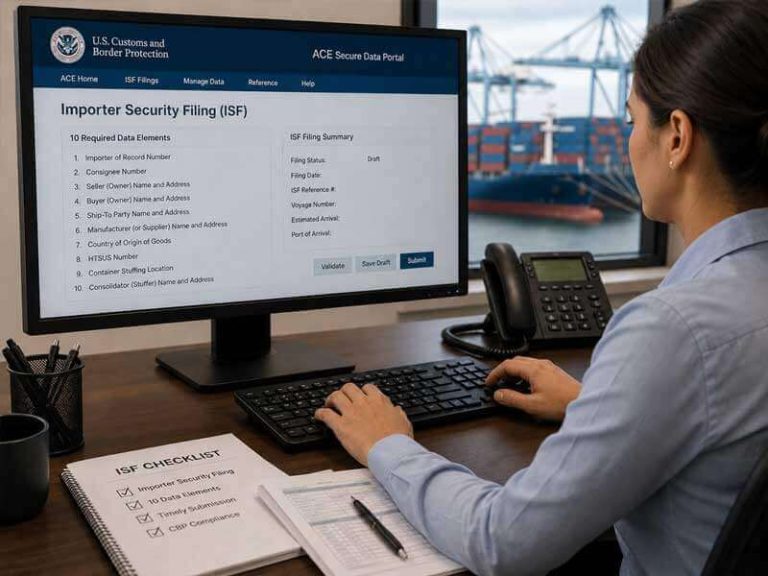
file an ISF late, you can get a $5,000 penalty. If you plead your case to Customs, CBP, we can mitigate that. We mitigate a lot of late filing penalties. They don’t necessarily all go away, but, yeah, the mitigation is one of the processes. But yes, it is true. We do have the opportunity to fight the good fight.
VO: The information shared on Very Importing People is for general educational and informational purposes only. Customs regulations and requirements can vary based on the specific circumstances of an import and may change over time. This podcast is not legal advice and should not be relied upon as guidance for a specific transaction. Importers remain responsible for exercising reasonable care and complying with applicable laws and regulations. For questions about your specific shipment or importing situation, consult a qualified customs professional or legal counsel.