
IOR ENFORCEMENT IS NOW IN EFFECT | REVIEW MY IOR


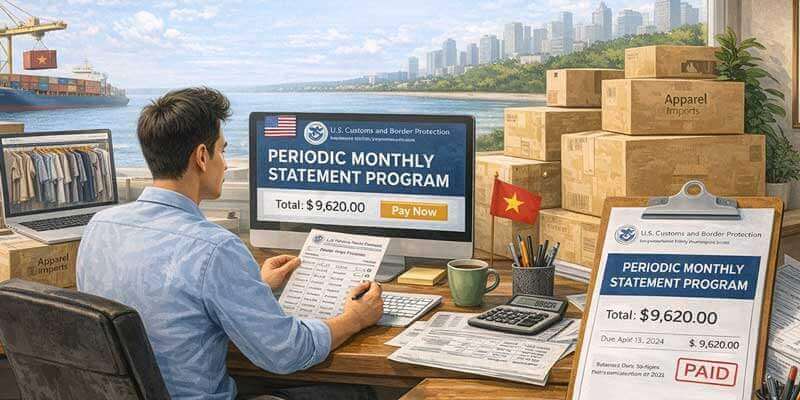


Most importers pay customs duties and fees through CBP’s Automated Clearinghouse (ACH) system. If you import frequently and want one scheduled monthly payment, periodic monthly statements could benefit your business. Duties and fees are paid to U.S. Customs and Border Protection (CBP) through the (ACH).
In the United States, customs duties are fees importers pay to CBP when bringing commodities into the country from a foreign trade partner. Duty rates vary by the type of commodity being imported and its country of origin. Tariffs, such as those invoked under Section 122 modify rates of duty, can increase this fee.
Besides duties, importers are also expected to pay the following fees for imported shipments:
Some commodities, such as hazardous materials, incur additional customs fees from the partner government agencies (PGAs) in charge of regulating their importation.
Note: FTA’s like the USMCA are one way you can reduce your import costs.
CBP’s ACH is a secure and nationwide electronic network used to accept and refund customs fee payments. To use this option, you must first create an account in CBP’s Automated Commercial Environment (ACE).
Speaking of refunds, CBP mandated that the vast majority of importers receive future refunds via the ACH in February 2026. This was part of a government effort to move payments and refunds to electronic platforms rather than accepting and distributing paper checks.
Paying customs fees via CBP’s ACH is the best solution for the vast majority of commercial importers in the United States. While customs fee payments can be remitted at ports of entry, doing so via ACH is faster and reduces CBP’s administrative burden.
Here’s an example of when using an ACH could be helpful:
An importer running a small online store that sells boutique kitchenware brings in sets from Italy twice a month. Each import has its own entry summary, and the company wants to pay duties and fees as each shipment arrives. Rather than bundling payments together, the importer pays through the ACH to pay the duties and fees on each import directly.
You will need to set up an ACE account to use the ACH payment and refund method. Despite CBP’s mandate for the use of ACH in most custom fee refunds, the majority of Importers of Record (IORs) on file with CBP still haven’t done so.
If you don’t have an ACE account and simply plan to use the ACH regardless, you won’t be able to. However, signing up is simple, making this potential pitfall easy to overcome. If you work with a customs broker, it’s likely your transactions are processed through their own ACE account, which is an acceptable alternative to having your own for the purposes of paying customs fees.
CBP’s Periodic Monthly Statement Program does not replace ACH. It changes how eligible entries are grouped and when they are paid. Instead of paying each entry separately, participating importers can pay eligible entries on the 15th working day of the following month through ACH.
Periodic Monthly Statements are best used for the following reasons:
Using this option is ideal for businesses that consistently bring imported shipments into the U.S.
Here’s an example of when using a Periodic Monthly Statement can be useful:
An online clothing store imports apparel from Vietnam 3 times a week through the same ports of entry every month. Rather than going through the process of paying for each shipment individually, the store takes advantage of CBP’s Periodic Monthly Statement program to combine them into one monthly payment.
This reduces their administrative burden by making the payment process easier.
If your business prefers to pay entries individually, the Periodic Monthly Statement option from CBP is less than ideal. Some businesses prefer to pay their entry summaries on a form-by-form basis for accounting purposes. If that’s true of your business, Periodic Monthly Statements aren’t your best choice.
There are two primary questions you should ask yourself when choosing between paying via standard ACH statements and Periodic Monthly Statements:
Let’s take a look at how answering these questions is the easiest way to determine how you should pay your customs fees.
Importers who frequently bring goods into the country on a scheduled basis benefit most from participating in CBP’s Periodic Monthly Statement program. The program allows importers to pay fees for multiple entry summaries under one statement, reducing paperwork and alleviating administrative burdens.
If you only import infrequently, paying your statements individually won’t necessarily create an overwhelming amount of paperwork and documentation, so the Periodic Monthly Statement program won’t have as many advantages as it does for high-volume importers.
Using Periodic Monthly Statements leads to a more predictable and steady cash flow for businesses. Paying customs fees in this method streamlines accounting and reporting processes, and provides a duty deferral window not available with standard ACH payments.
Paying customs fees on individual summaries can create an irregular cash flow for your business, but smaller businesses aren’t as likely to be burdened by doing so compared to larger businesses with multiple employees and locations.
Now that you know what customs fees you’re paying and the methods available to you, let’s take a look at the steps you should follow to complete your payment:
Following these steps carefully will ensure your payments to CBP are accurate and timely.
The right payment method depends on your import volume, accounting preferences, and whether you want to pay each entry individually or on a monthly schedule. If you import frequently, PMS can reduce admin work and create a more predictable payment cycle. If you import less often, standard ACH payment is usually simpler.
Call us today at (855) 912-0406 or reach out to us on our contact page to start taking the guesswork out of paying customs fees.
Sources:
Automated Clearinghouse (ACH), CBP, 2025
ACE: The Import and Export Processing System, CBP, 2026
Periodic Monthly Statement, CBP, 2025
 Copy URL to Clipboard
Did you find this article helpful?
See more of our coverage on Google.
Add usacustomsclearance.com as a preferred source!
Add usacustomclearance.com as a preferred source!
See more of our coverage in Google's Top Stories.
Licensed customs support for importers across a wide range of U.S. entry needs. USA Customs Clearance provides Customs Bonds, Consulting, Customs Brokerage, Manifest Confidentiality, Importer of Record support, and Guides & Resources to help importers prepare for U.S. Customs and Border Protection (CBP) requirements and customs clearance with regulatory compliance, greater clarity, and confidence.
With licensed broker support, transparent service information, and secure checkout, we help importers take the right next step.

We know the importing process and requirements can be confusing, but they don't have to be.
We're here to help.
When purchasing a product from our website, you can feel confident knowing our team can help if you accidentally select the wrong product. We'll guide you through the correct purchase and any applicable refund process.
Important Refund Policy Information
Eligible refunds are subject to a $50 processing fee, which will be deducted from your original purchase amount. Please allow up to 90 days for refunds to be processed, as refunds are handled quarterly by our Accounting Department.
Refunds are available only if you have not yet:
Additional Refund Terms
You have 90 days from the date of purchase to submit your bond application. After 90 days, bond fees are forfeited and are nonrefundable.
All eBook sales are final and nonrefundable.
Add your first comment to this post