
IOR ENFORCEMENT IS NOW IN EFFECT | REVIEW MY IOR


In This Article:


To correctly submit an Importer Security Filing (ISF), a registered U.S. importer first needs to gather 10 required data elements before transmitting the ISF to U.S. Customs and Border Protection (CBP), usually through the Automated Commercial Environment (ACE) Portal on CBP’s website.
Submitting an ISF to U.S. Customs can be broken down into two major steps:
The ISF is sometimes referred to as the 10+2 filing since the importer needs to fill out 10 elements on the document while the carrier is responsible for two.
The full list of information required by the ISF importer is as follows:
These data elements must be submitted for shipments of goods intended for use or resale in the U.S. A separate ISF-5 document is used for transit cargo that is only being imported temporarily.
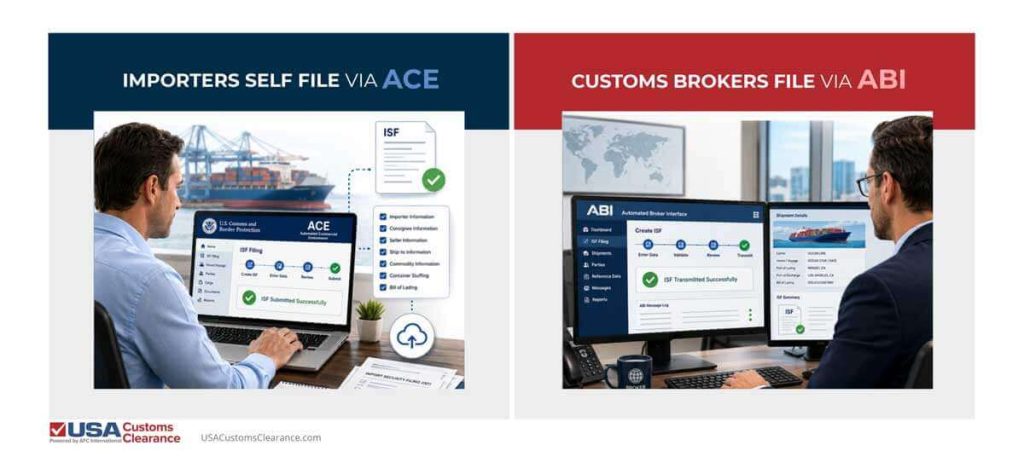
Importers can file their ISF documents via the ACE portal, which can be accessed on CBP’s website. This portal is where U.S. importers submit most of their customs documents, such as CBP Form 7501, for the agency to review.
Business owners often partner with a Licensed Customs Broker to simplify complex customs business, and a broker can submit the ISF on an importer’s behalf using Automated Broker Interface (ABI) software, a high-speed transmission method usually only available to customs brokerages.
CBP requires importers to submit the ISF for an ocean shipment 24 hours or more before the goods are loaded onto their shipping vessel. The ISF document is required for all formal shipments imported via ocean freight, with the exception of bulk goods.
After CBP receives and reviews an ISF, they assign it one of three statuses:
The reasons CBP can decide to reject an ISF include significant data mismatches between related documents, severe formatting errors, and missing or invalid customs bond information.
CBP may assess fines of up to $5,000 in liquidated damages for each late or inaccurate ISF they receive. Non-monetary penalties range from delays and cargo inspections to stricter enforcement actions on future imported shipments.
Businesses certified with the Customs Trade Partnership Against Terrorism (CTPAT) may see their privileges and membership revoked as well.
Importers can avoid these consequences by amending any documentation errors on a rejected ISF before the cargo arrives at its first U.S. port, ideally as soon as the new information is available.
Yes, importers can amend ISFs flagged as “accepted with warnings” while cargo is in transit within a specific time frame, usually no less than 24 hours before the cargo vessel reaches its first U.S. port.
A rejected ISF cannot be amended, but importers can submit a new ISF to CBP if their initial submission is rejected.
Importers need to avoid ISF errors associated with accuracy and timing when it comes to filing this customs document. Specifically, importers should follow these guidelines to keep their ISFs timely and compliant:
Making sure the ISF is filed accurately and on time is one of the core expectations of any IOR in the United States when they bring a shipment into the country from a foreign supplier. Since the penalties for non-compliance can be so expensive, importers often choose to partner with an experienced customs broker when submitting this and other documents CBP requires.
A confident and knowledgeable importer can file their own ISF if they’re certain they can provide accurate information and meet CBP’s standard of reasonable care. Importers who are uncertain about CBP documentation regulations can work with a Licensed Customs Broker whose day-to-day experience with government paperwork is leveraged to ensure that the ISF is filed correctly.
If you have questions about filing an ISF, call us at (855) 912-0406 or fill out a contact form online today.
Sources
Reasonable Care: An Informed Compliance Publication, U.S. Customs and Border Protection, September 2017
Import Security Filing (ISF) - When to submit to CBP, U.S. Customs and Border Protection, 11/4/2025
ACE, U.S. Customs and Border Protection
Importer Security Filing and Additional Carrier Requirements, U.S. Customs and Border Protection, August 2009
 Copy URL to Clipboard
Did you find this article helpful?
See more of our coverage on Google.
Add usacustomsclearance.com as a preferred source!
Add usacustomclearance.com as a preferred source!
See more of our coverage in Google's Top Stories.
Licensed customs support for importers across a wide range of U.S. entry needs. USA Customs Clearance provides Customs Bonds, Consulting, Customs Brokerage, Manifest Confidentiality, Importer of Record support, and Guides & Resources to help importers prepare for U.S. Customs and Border Protection (CBP) requirements and customs clearance with regulatory compliance, greater clarity, and confidence.
With licensed broker support, transparent service information, and secure checkout, we help importers take the right next step.

Add your first comment to this post