
IOR ENFORCEMENT IS NOW IN EFFECT | REVIEW MY IOR



In This Article:


The U.S. customs prohibited items list covers goods that cannot legally be imported into the United States for commercial entry. U.S. Customs and Border Protection (CBP) blocks some goods outright, while partner government agencies restrict other goods unless the importer has the required permit, license, registration, or prior notice. Before shipping commercial goods to the United States, importers should confirm whether the product is prohibited or restricted and which agency regulates it.
Goods that are commonly prohibited from import include counterfeit products, certain wildlife and plant products, some defense-related articles imported without authorization, and merchandise barred by sanctions or federal law.
Other goods are restricted rather than prohibited, which means they may be imported only after the importer obtains approval from the correct agency.
The graphic below summarizes the main categories of prohibited and restricted imports.
Prohibited items cannot be imported into the United States under current federal law or agency rules. Restricted items can be imported legally, but only if the importer meets the requirements of the agency that regulates them, such as obtaining a permit, license, registration, or prior notice.
The table below shows the difference between prohibited and restricted imports.
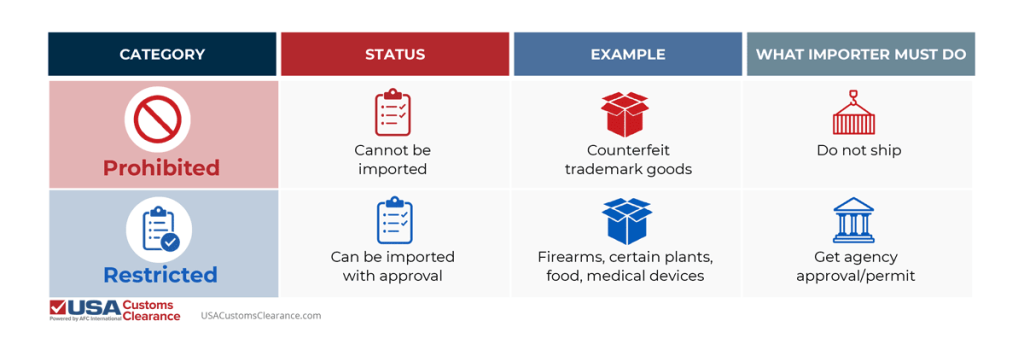
CBP and other U.S. agencies commonly restrict or prohibit the following categories of imports:
Commonly Prohibited Imports:
Commonly Restricted Imports
For example, many plants imported into the United States require a permit from the U.S. Department of Agriculture’s Animal and Plant Health Inspection Service (USDA APHIS).
Goods that are effectively prohibited for most importers include certain wildlife-based products and goods that violate U.S. intellectual property laws.
CBP prohibits certain wildlife-based goods from entering the United States, including:
USDA APHIS also restricts or prohibits certain endangered plants and plant products, including species such as true rosewood.
Goods that violate federally registered trademarks or protected copyrights cannot be imported into the United States. CBP actively enforces intellectual property rights and seizes merchandise that infringes trademarks, copyrights, and related protections.
The table below shows selected product categories CBP seized for intellectual property rights violations in 2024, along with their combined manufacturer’s suggested retail price (MSRP):
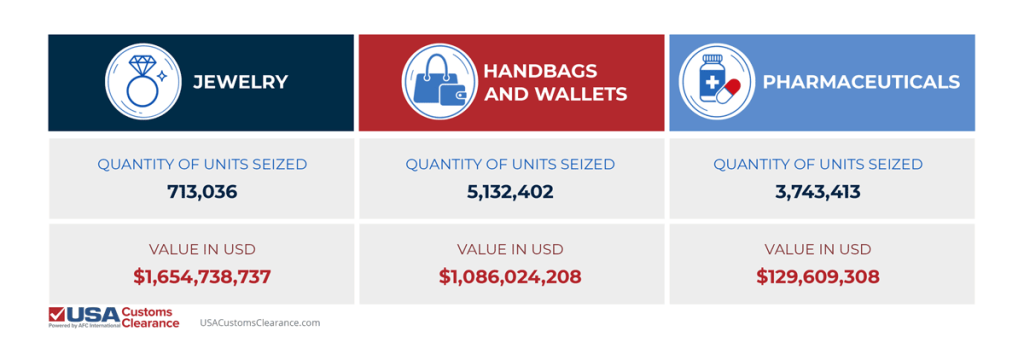
Intellectual property rules apply whether an infringing product was imported intentionally or by mistake. Importers should vet suppliers carefully to avoid purchasing goods that CBP may detain, seize, or refuse at the port of entry.
Some defense and military articles require registration, licensing, permits, or other authorization before they can be imported into the United States. These articles are identified in the United States Munitions List.
Partner government agencies (PGAs) regulate certain imports that may raise safety, health, environmental, or trade-compliance concerns. The agencies below oversee common restricted product categories and may require importers to obtain permits, licenses, registrations, prior notices, or other approvals before shipment.
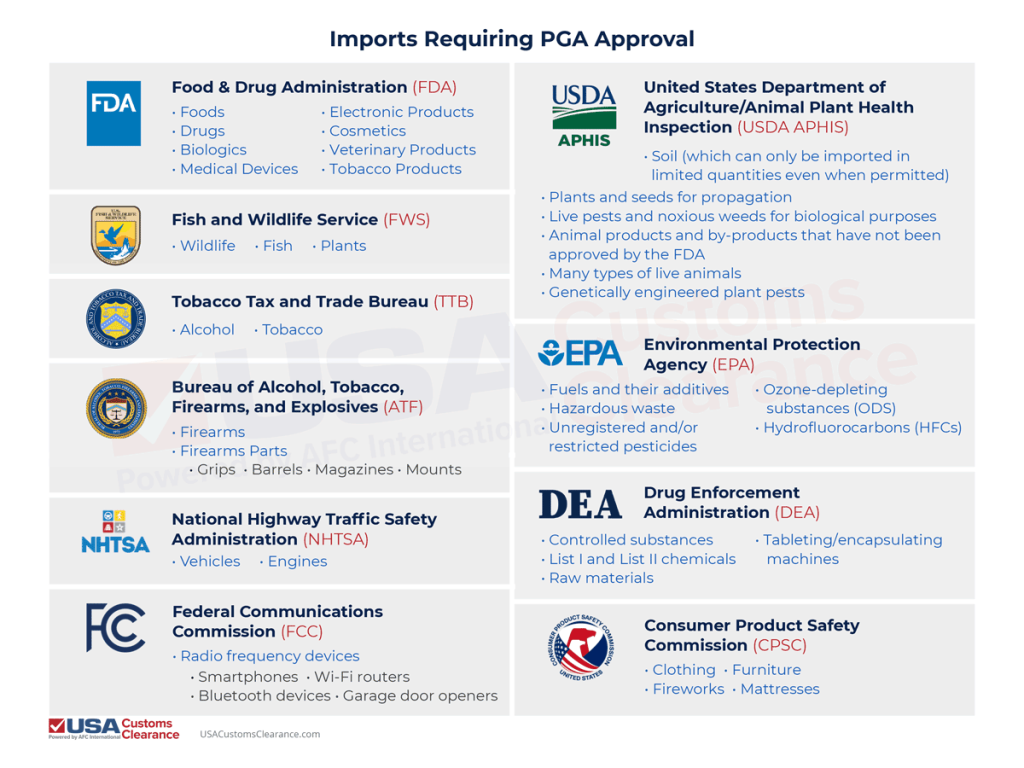
Keep in mind, the commodities in the right column aren’t exhaustive. You should always check to determine whether your goods are subject to the requirements of the PGAs we’ve listed.
OFAC sanctions programs restrict or prohibit certain imports and other transactions involving specific countries, regions, entities, and individuals. The exact restrictions depend on the sanctions program, the product type, the parties involved, and whether a license or exception applies.
Importers should review the current sanctions program and parties involved before proceeding with the transaction:
Other jurisdictions may be subject to targeted sanctions that affect specific entities, sectors, or transactions rather than all trade. Importers should screen new suppliers and counterparties against OFAC’s Specially Designated Nationals and Blocked Persons (SDN) List and other restricted-party lists before shipping.
Even when a country is not subject to comprehensive sanctions, a specific company or individual involved in the transaction may still be blocked or restricted.
Before shipping commercial goods to the United States, importers should use the following checklist to confirm that the shipment complies with CBP and partner agency requirements:
If you are unsure about any of these steps, a licensed customs broker can review the shipment, identify documentation gaps, and help determine whether the goods meet CBP and PGA requirements.
A Licensed Customs Broker can review your shipment for prohibited goods, identify restricted items that require agency approval, and help you confirm that the necessary permits, licenses, or notices are in place before import. Give us a call at (855) 912-0406 to learn more about how we can help your business’s importing efforts. You can also reach out to us on our contact page.
Sources:
Berne Convention for the Protection of Literary and Artistic Works, WIPO, 1986
Animal and Plant Health Inspection Service, APHIS/USDA
Title 22 Part 121 - The United States Munitions List, CFR
Office of Foreign Assets Control, OFAC/U.S. Department of the Treasury
Specially Designated Nationals (SDNs) and the SDN List, OFAC/U.S. Department of the Treasury
 Copy URL to Clipboard
Did you find this article helpful?
See more of our coverage on Google.
Add usacustomsclearance.com as a preferred source!
Add usacustomclearance.com as a preferred source!
See more of our coverage in Google's Top Stories.
Licensed customs support for importers across a wide range of U.S. entry needs. USA Customs Clearance provides Customs Bonds, Consulting, Customs Brokerage, Manifest Confidentiality, Importer of Record support, and Guides & Resources to help importers prepare for U.S. Customs and Border Protection (CBP) requirements and customs clearance with regulatory compliance, greater clarity, and confidence.
With licensed broker support, transparent service information, and secure checkout, we help importers take the right next step.

We know the importing process and requirements can be confusing, but they don't have to be.
We're here to help.
When purchasing a product from our website, you can feel confident knowing our team can help if you accidentally select the wrong product. We'll guide you through the correct purchase and any applicable refund process.
Important Refund Policy Information
Eligible refunds are subject to a $50 processing fee, which will be deducted from your original purchase amount. Please allow up to 90 days for refunds to be processed, as refunds are handled quarterly by our Accounting Department.
Refunds are available only if you have not yet:
Additional Refund Terms
You have 90 days from the date of purchase to submit your bond application. After 90 days, bond fees are forfeited and are nonrefundable.
All eBook sales are final and nonrefundable.
Add your first comment to this post