
IMPORT TARIFFS - LATEST NEWS & UPDATES



While CBP clears all products before they reach greenhouses and gardens, USDA regulates agricultural products like plants. Before ordering your shipment of foliage, make sure you have your USDA import permit to comply with CBP regulations for smooth customs clearance. At USA Customs Clearance, we understand navigating customs can be like peeling an onion: There are many layers to sift through. Learn how to swiftly check off every task on your customs clearance list to import plants and more.
Key Takeaways:
Grab your gardening gloves and let’s get started.

Customs clearance can be a complex process, but working with a customs broker makes it seamless. Get in touch with our licensed customs brokers today.
Because CBP can’t regulate every product entering the US on its own, it enlists the USDA to regulate certain agricultural products. This includes meats, eggs, poultry, and plants, which all require a USDA import permit.
For plants and plant products, CBP requires a USDA import permit for:
CBP inspects shipments containing twelve plants or fewer, but the Animal and Plant Health Inspection Service (APHIS) inspects shipments of thirteen or more plants at a Plant Inspection Station nearest to your port of entry.
Excluding frozen, generally cooked, dried, and otherwise processed vegetables and fruits do not require a USDA import permit. This also includes some plants and plant products like aloe vera, herbal medicines, or potpourri of plant origin. However, be sure to double-check the country of origin to ensure your plants remain in compliance with CBP rules.
Related: Importing Plants To The United States: What You Need To Know
APHIS inspects all plants and wildlife to protect US consumers from agricultural diseases, invasive species, and pests.
Under the Lacey Act, importers are required to file the following forms upon entry.
If you’re importing goods regulated by APHIS, you’re required to register with APHIS eFile. You’ll use this online platform to submit your PPQ 587 form. You'll submit your PPQ 505 form to your customs broker to be sent alongside your entry form.
At this time, USDA import permits do not cost importers any additional fees. They are free to file, excluding any user fees like the Agricultural Quarantine and Inspection (AQI) administered by APHIS and CBP.
Not all plants are created equal. APHIS has special requirements for certain plants, while other plants are prohibited altogether.
Plants with special requirements include artificially dwarfed plants like bonsai or endangered plant species that are protected under the Convention on International Trade in Endangered Species Act (ESA).
Prohibited plants are a different case. Shippers are not allowed to import the following plants into the US:
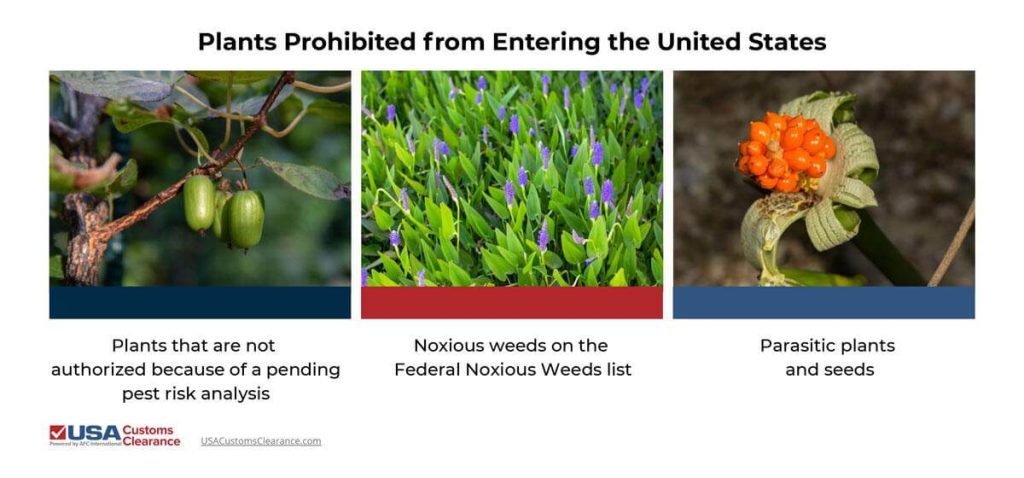
APHIS may allow prohibited plants to be imported for research purposes within a containment facility approved by the entity.
Just as USDA import permits are required for plant products, importers must also file a Lacey Act declaration for their plant products and shipments containing plant materials.
The Lacey Act declaration ensures importers comply with anti-trafficking of illegal plants, fish, and wildlife.
Foreign trade zone (FTZ) operators are also required to file Lacey Act declarations and request an 11-digit alphanumeric serial number to include in their submission via APHIS Lacey Act Web Governance (LAWGS). This specific filing for FTZ operators is mandatory and must be made at least five days before entry.
Falling out of compliance or violating the Lacey Act can lead to a civil penalty of up to $250. Fines may be steeper for more severe violations, such as a civil penalty up to $10,000 for falsifying labels.
If an individual selling plants and plant products with a value of $350 or higher violates the Lacey Act, they face a criminal punishment of five years in prison and a fine of $250,000 or twice the gross gain or loss.
Importers can steer clear of such penalties by working with a licensed customs broker who specializes in CBP compliance and customs clearance for importing plants, plant products, and other goods.
Avoid hefty fines or refusal of entry with our expert customs brokerage services tailored to your customs needs.
Starting January 2026, APHIS requires electronic submissions instead of paper declarations for PPQ 505 or 5050B. Importers can use one of the two following methods to file a Lacey Act declaration:
On either site, importers of record or their customs broker can submit declarations with the required information, including, but not limited to:
APHIS requires importers to declare plants not listed on the Lacey Act Declaration Implementation Schedule to remain in compliance, which includes your product’s HTS code. You can determine your plant’s specific HTS code for labeling by using our HTS Code Lookup tool.
Whether you’re importing plants for research or gardening, USA Customs Clearance is at your service with our licensed customs brokers who are ready to handle the heavy lifting for you. From tariff classification to securing a customs bond, our customs brokers will guide you through each step to customs clearance success.
Contact us at (855) 912-0406 or book a consultation with our expert brokers today.
 Copy URL to Clipboard

Add usacustomsclearance.com as a preferred source!
See more of our coverage in Google's Top Stories.

Add usacustomclearance.com as a preferred source!
See more of our coverage in Google's Top Stories.
Add your first comment to this post