
IOR ENFORCEMENT IS NOW IN EFFECT | REVIEW MY IOR


In This Article:


Your customs entry has been submitted, Customs and Border Protection has accepted them, and your imported freight shipment has passed the complex process of US customs clearance. Now what? Here at USA Customs Clearance we’ve cleared thousands of imports over the years. Here’s what you’ll need to do after your shipment makes it past customs.
A freight shipment can clear customs, which is to say that CBP can be satisfied that it’s been brought into the country according to all applicable regulations, without quite being ready to leave port. This is the distinction between customs clearance and release of goods.
Shipments clear customs when they satisfy conditions such as:
At this point, your shipment is eligible to enter the country. However, before it does so, you’ll need to pay any fees associated with the import process.
These include:
If your shipment has been cleared and released, your goods are effectively just that: yours. What happens afterward is largely up to you, and was probably decided upon long before the shipment arrived.
Related: A Guide to US Import Taxes: Duties, Tariffs and Other Fees
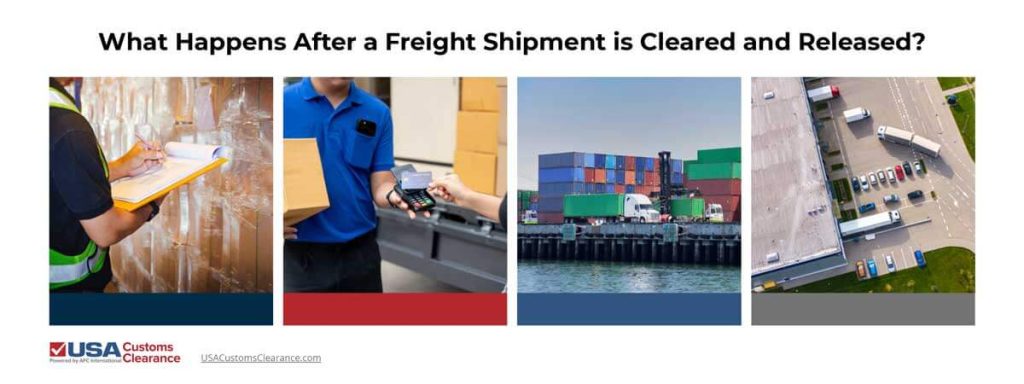
The first thing you’ll probably want to do as an importer after your goods have been cleared and released is pick them up and get them out of port. Otherwise, you risk incurring demurrage charges, which are basically port storage fees.
Given the complexity of freight transport, your domestic freight shipping arrangements should have been made prior to the shipment’s arrival. The first step will usually be port drayage, especially if you’re receiving full containers.
Port drayage involves specialized trucks picking up your container(s) and transporting them to a nearby (usually 50 miles away or less) warehouse or distribution center. Doing so avoids the aforementioned demurrage fees and gets the ball rolling on the rest of the logistics process.
From here on out, what happens to your shipment is based on your domestic freight shipping and storage arrangements. If you arranged for your import transaction through a brokerage like us, these arrangements were probably part of your overall price of service.
Getting your shipment cleared by customs and released from port are important steps in the overall import logistics process. If you want to ensure fast, compliant clearance for your shipments, we’re here to help.
USA Customs Clearance has years of experience helping importers like you cut through the red tape of import regulations and CBP requirements, avoiding delays and keeping your business in motion. Call us at (855) 912-0406 or fill out a contact form online to find out what we can do for your shipments in port and beyond.
 Copy URL to Clipboard
Did you find this article helpful?
See more of our coverage on Google.
Add usacustomsclearance.com as a preferred source!
Add usacustomclearance.com as a preferred source!
See more of our coverage in Google's Top Stories.
Licensed customs support for importers across a wide range of U.S. entry needs. USA Customs Clearance provides Customs Bonds, Consulting, Customs Brokerage, Manifest Confidentiality, Importer of Record support, and Guides & Resources to help importers prepare for U.S. Customs and Border Protection (CBP) requirements and customs clearance with regulatory compliance, greater clarity, and confidence.
With licensed broker support, transparent service information, and secure checkout, we help importers take the right next step.

Add your first comment to this post