
IOR ENFORCEMENT IS NOW IN EFFECT | REVIEW MY IOR



In This Article:


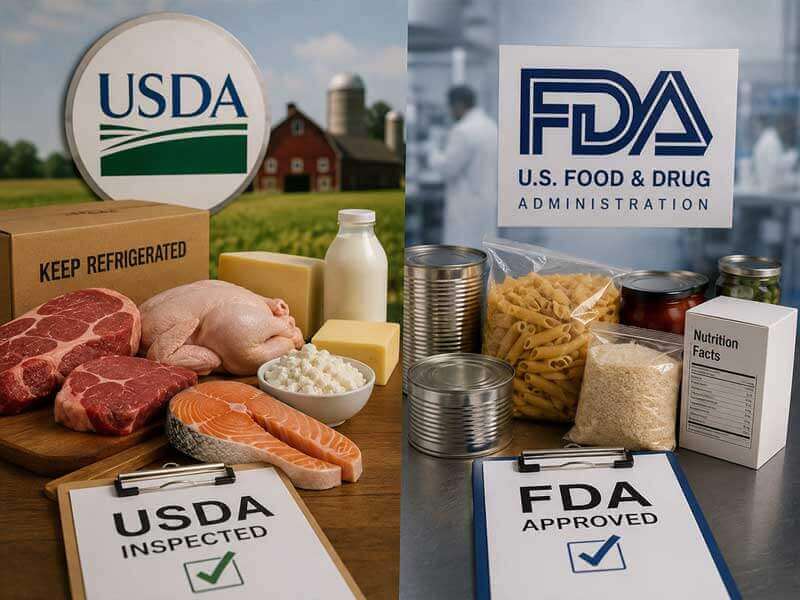
In the U.S., the FDA and USDA are partner government agencies (PGA) responsible for regulating the importation of food into the country. The FDA must approve of facilities that export food to the U.S., while meats and certain dairy products have to meet USDA standards as enforced through the Food Safety Inspection Service (FSIS) to be sold here.
The USDA regulates the importation of meat, poultry, processed eggs, and composite foods containing 3% meat or more, such as frozen meals. The agency works through FSIS to ensure these foods are safe for consumption. The USDA also administers quotas for imported dairy products.
The Animal and Plant Health Inspection Service (APHIS), a division of the USDA, is also responsible for regulating dairy products, fruits, and vegetables, but not for the purposes of ensuring their safety for human consumption. Rather, APHIS focuses on regulations that protect U.S. agriculture from outside pests and diseases. This article will focus on regulation for consumption for the most part.
While not a strictly regulatory involvement, the USDA also grades the quality of imported butter, powdered milks, and cheeses.
Regulatory authority for these foodstuffs is assigned to FSIS by the following acts:
These acts also provide greater details about which types of meat, poultry, and egg products fall under FSIS authority.
Under the Federal Meat Inspection Act, FSIS regulates meats derived from the following animals, which are referred to as “amenable species” within the Federal Meat Inspection Act:
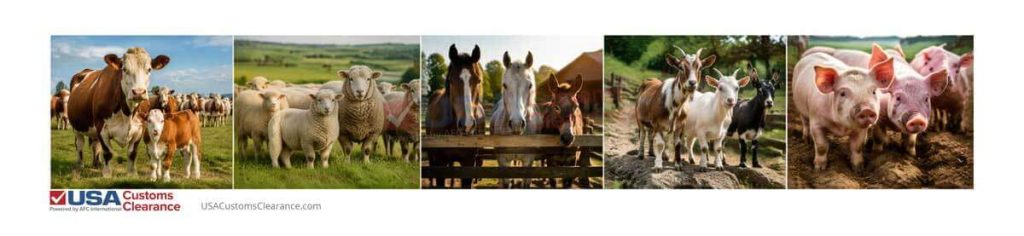
The service also regulates meat derived from catfish (siluriformes) and contains a provision for other livestock to be added by the Secretary of Agriculture.
The Poultry Products Inspection Act names FSIS as the agency responsible for regulating products made wholly or in part from “domesticated birds, live or dead”, unless they have not historically been considered poultry products.
Examples of poultry include:
The act defines poultry products as those which are sourced wholly or partly from poultry carcasses.
Composite foods contain products derived from processing animal products and plant products. The percentage of meat, poultry, egg, and/or dairy in these foods determines which agency holds regulatory authority.
Foods that contain more than 3% raw meat, 2% cooked meat, 2% cooked poultry, or any processed eggs are subject to USDA safety standards.
FSIS is responsible for regulating liquid, frozen, and dried/powdered eggs per the Egg Products Inspection Act. USDA’s Agricultural Marketing Service (AMS) performs inspections to ensure that shelled eggs meet U.S. quality standards. However, they aren’t responsible for production, transportation, and storage regulations, which fall under FDA oversight.
The FDA is a PGA that takes primary responsibility for regulating most types of imported foods, with the exception of meats, egg products, and those dairy products not specifically regulated by the USDA. This includes meat harvested from “non-amenable species” like approved game meats, shelled eggs, liquid milk, and cream. In fact, importers need a permit from the FDA to import milk and cream into the U.S.
FDA regulations require importers to file Prior Notice of Imported Food with the administration to streamline inspection efforts and improve their coordination with U.S. Customs and Border Protection (CBP) agents.
Regulatory authority from USDA and FDA both apply to the same shipment when:
The following scenario illustrates a clear circumstance where addition of one ingredient alters regulatory authority.
Two importers decide to import frozen pizzas for resale. Importer A orders 1,000 frozen cheese pizzas, while Importer B chooses 1,000 pepperoni pizzas.
The FSIS makes frequent references to pizzas as examples of how to determine what qualifies as a composite food product.
An important point to remember is that even when the USDA has regulatory oversight for the safety of a food product, that oversight doesn’t obviate FDA customs clearance regulations like prior notice.
There are some basic documents that CBP requires importers to file for any commercial import transaction. One of these is CBP Form 5106, the Importer of Record (IOR) registration form. It’s not necessary to submit this form for every imported shipment, but CBP requires an initial registration and for the form to be updated in cases such as change of address.
On a per-shipment basis, importers will need to file the filing documents for USDA and FDA-regulated foods:
Commercial food importers will also need a customs bond on file with CBP to guarantee payment of duties and other customs fees.
Import entries cannot be filed with the USDA or FDA. Importers can only submit the entry form, formally known as CBP Form 7501, via CBP’s Automated Commercial Environment (ACE) Portal or by a customs broker using Automated Broker Interface Software (ABI). As such, it is practically impossible to file an entry with the wrong regulatory agency.
However, new and inexperienced importers can easily make mistakes determining whether their food shipments are subject to regulations from the USDA or FDA. These mistakes can lead to delays, FDA holds, and possible punitive measures from CBP during customs clearance.
Rather than being concerned about filing an entry with the wrong agency, food importers should focus on determining the extent of the FDA or USDA’s regulatory authority over their shipments. This information can impact documentation and permit requirements.
Use the following chart as a guideline to determine if your imported foods are regulated by the USDA or FDA.
For the purposes of this chart, I’ll address which agency regulates the safety of the food in question without regard to grading responsibilities that usually fall to the USDA.
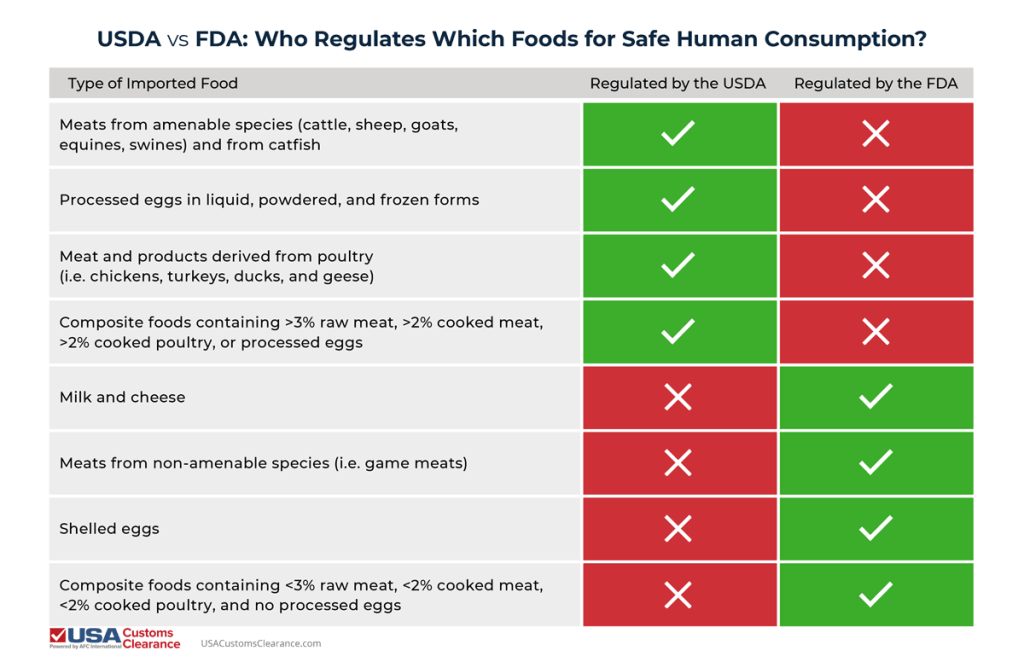
This chart reflects primary food-safety oversight. Other USDA components, such as APHIS, AMS, or quota administration, may still apply depending on the product.
Importers who plan to bring products made in part or in whole from non-amenable species should also check U.S. Fish and Wildlife Service (USFWS) regulatory applicability to their goods.
Importers often struggle with mixed-jurisdiction shipments, composite products, and entry-document requirements. A Licensed Customs Broker can help classify the product correctly, identify whether USDA, FDA, or both apply, and reduce clearance delays.
Call us at (855) 912-0406 or fill out a contact form online to find out how we can simplify your food importing process.
Sources:
Market’s Regulation, and Policy, U.S. Department of Agriculture, 2025
7 USC Ch. 48: Humane Methods of Livestock Slaughter, Office of Law Revision Council United States Code
21 USC Ch. 15: Egg Products Inspection, Office of Law Revision Council United States Code
21 USC Ch. 10 Poultry and Poultry Products Inspection, Office of Law Revision Council United States Code
21 USC Ch. 12: Meat Inspection, Office of Law Revision Council United States Code
What Are the Regulations for Importing Dairy Products, U.S. Customs and Border Protection, 2025
Home Page, Food and Drug Administration
Prior Notice of Imported Foods, U.S. Food and Drug Administration, 2025
Composite Products for Human Consumption from Countries Outside the EU, U.S. Department of Agriculture
Putting American Farmers First, U.S. Department of Agriculture
Importing and Exporting, U.S. Fish and Wildlife Service
 Copy URL to Clipboard
Add usacustomclearance.com as a preferred source!
See more of our coverage in Google's Top Stories.
Licensed customs support for importers across a wide range of U.S. entry needs. USA Customs Clearance provides Customs Bonds, Consulting, Customs Brokerage, Manifest Confidentiality, Importer of Record support, and Guides & Resources to help importers prepare for U.S. Customs and Border Protection (CBP) requirements and customs clearance with regulatory compliance, greater clarity, and confidence.
With licensed broker support, transparent service information, and secure checkout, we help importers take the right next step.

We know the importing process and requirements can be confusing, but they don't have to be.
We're here to help.
When purchasing a product from our website, you can feel confident knowing our team can help if you accidentally select the wrong product. We'll guide you through the correct purchase and any applicable refund process.
Important Refund Policy Information
Eligible refunds are subject to a $50 processing fee, which will be deducted from your original purchase amount. Please allow up to 90 days for refunds to be processed, as refunds are handled quarterly by our Accounting Department.
Refunds are available only if you have not yet:
Additional Refund Terms
You have 90 days from the date of purchase to submit your bond application. After 90 days, bond fees are forfeited and are nonrefundable.
All eBook sales are final and nonrefundable.
Add your first comment to this post